Excerpts from M. Bühler on RM Marco Pezzotta, Bianca Benenti “Anus Horribilis”
at Kunstmuseum St. Gallen 2024
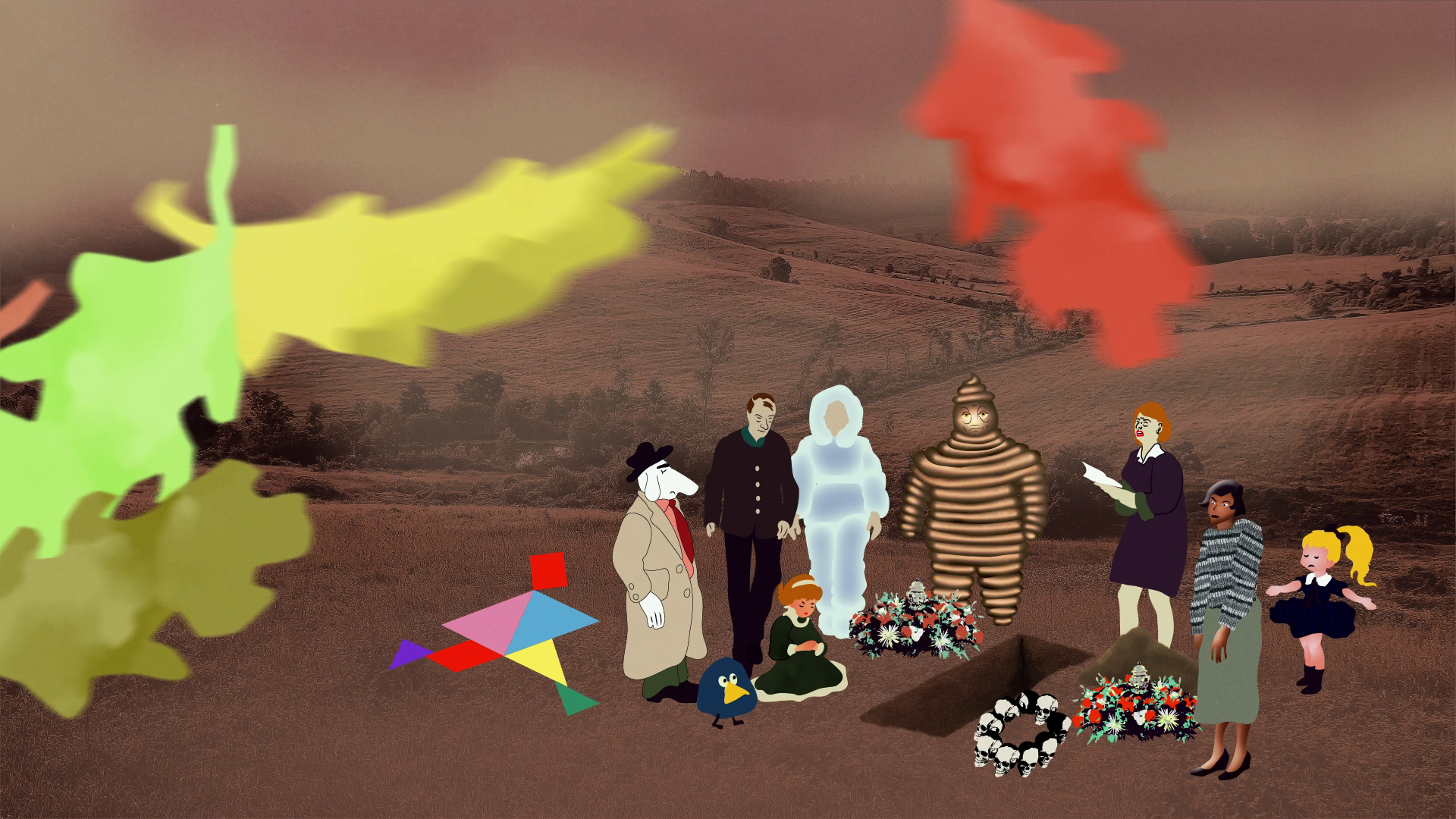
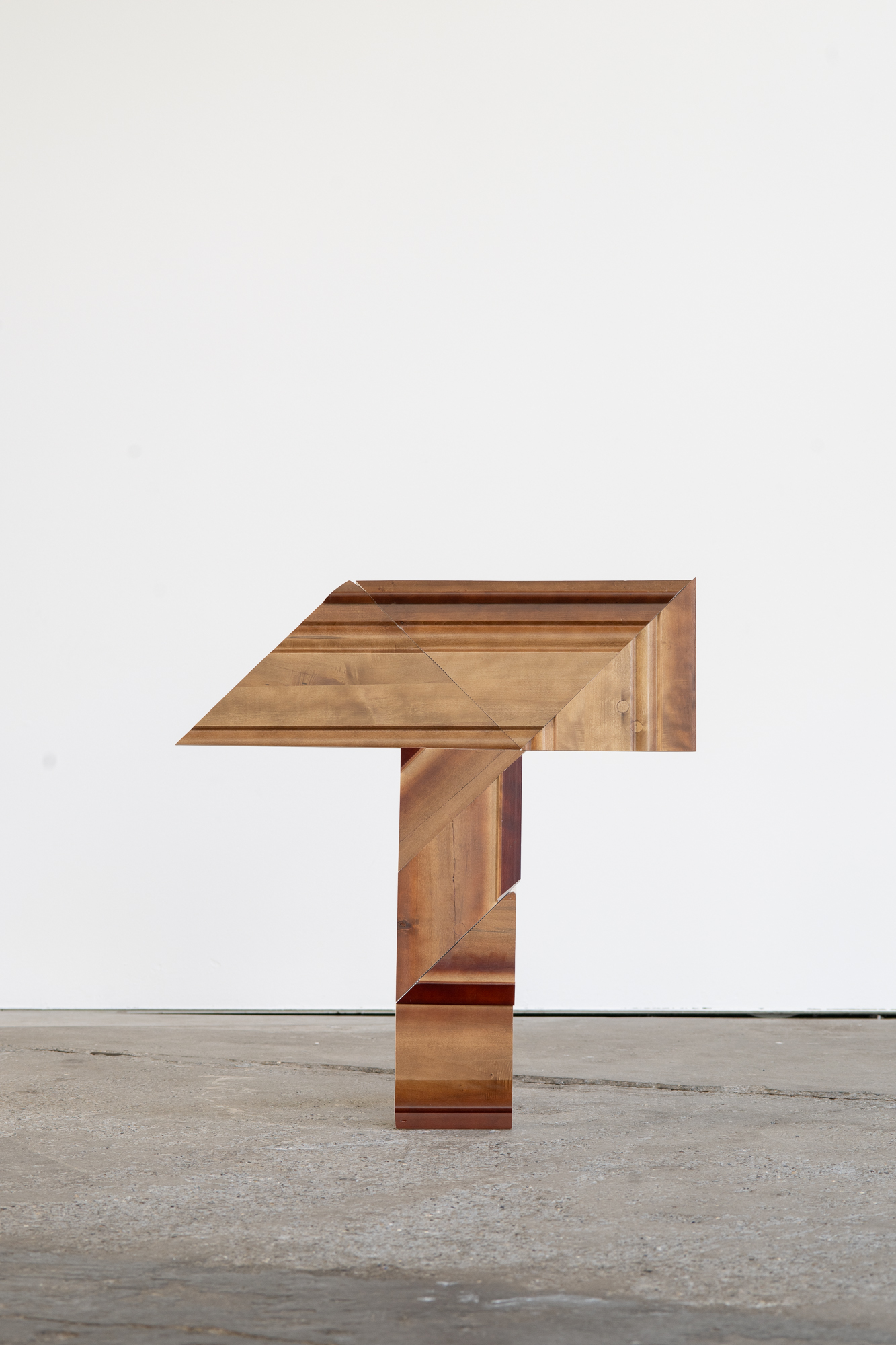
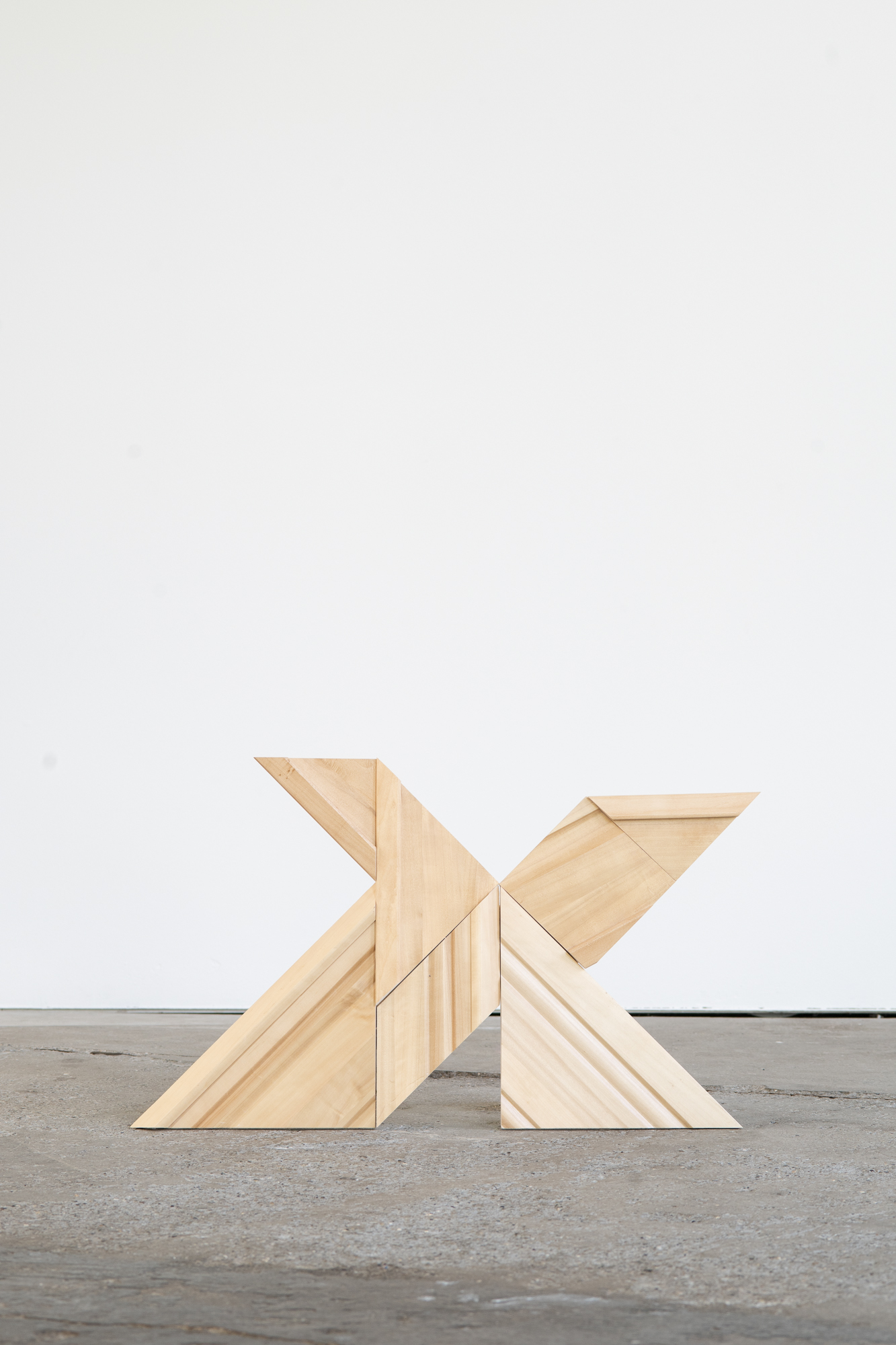
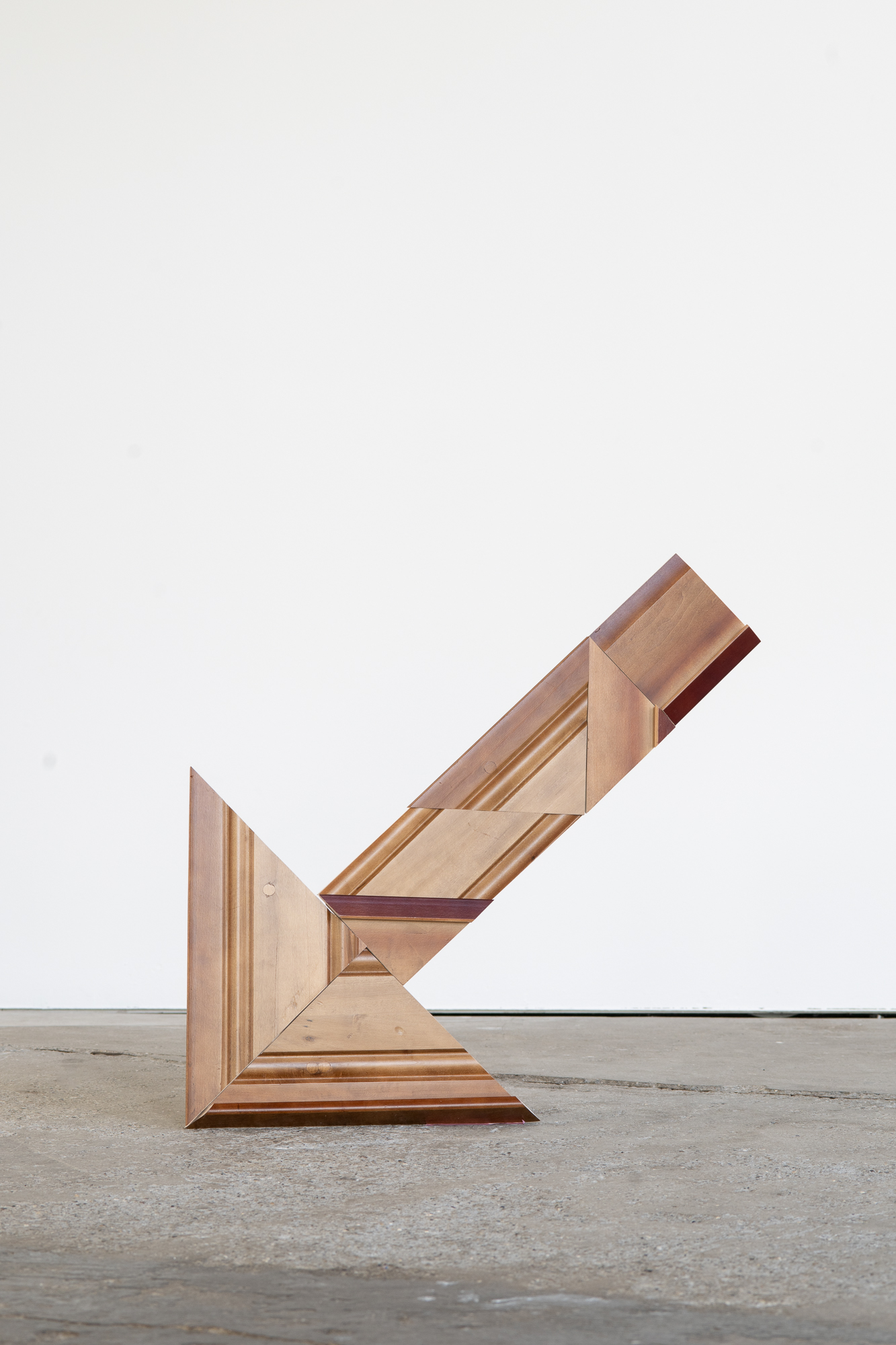
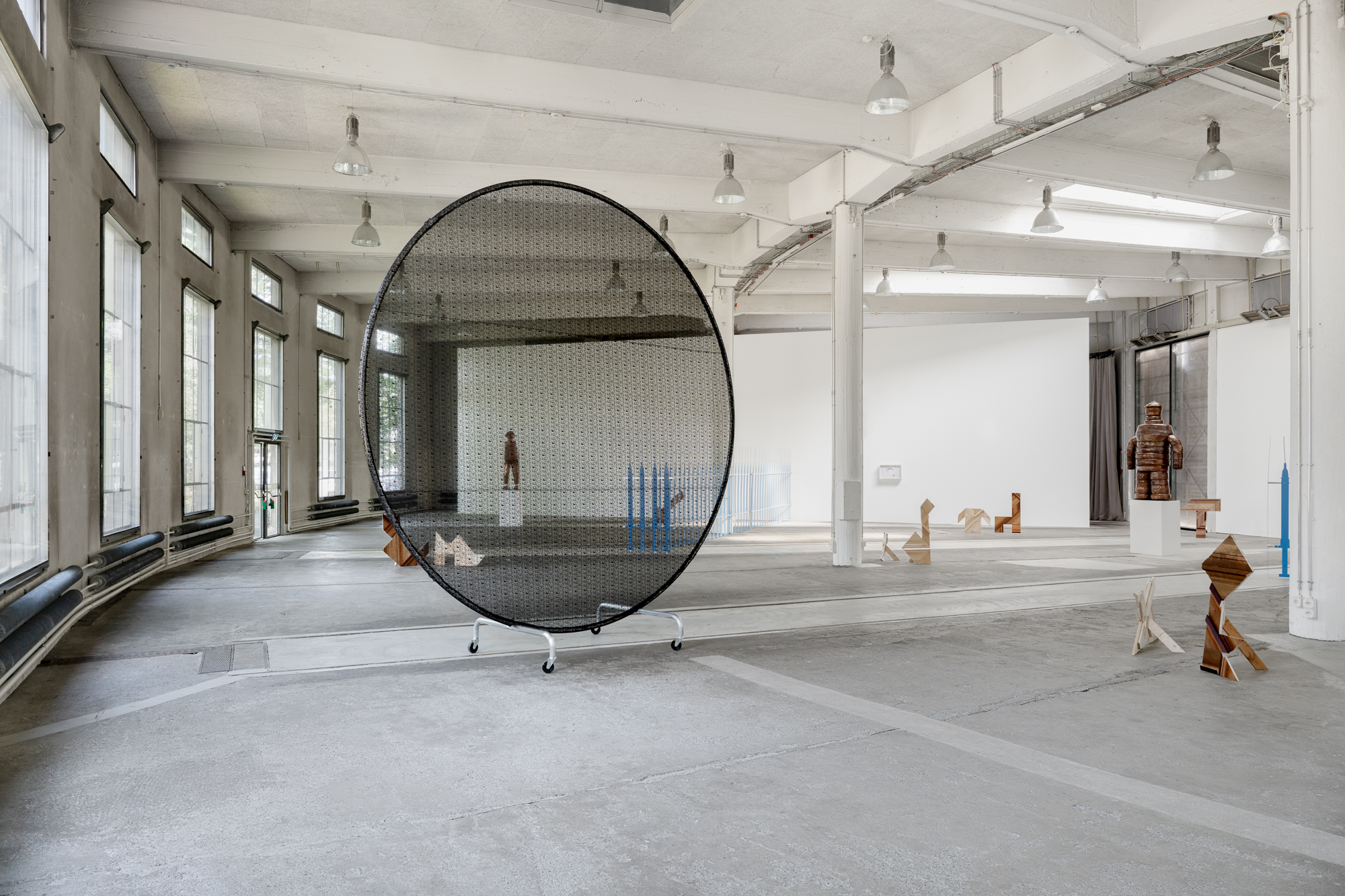
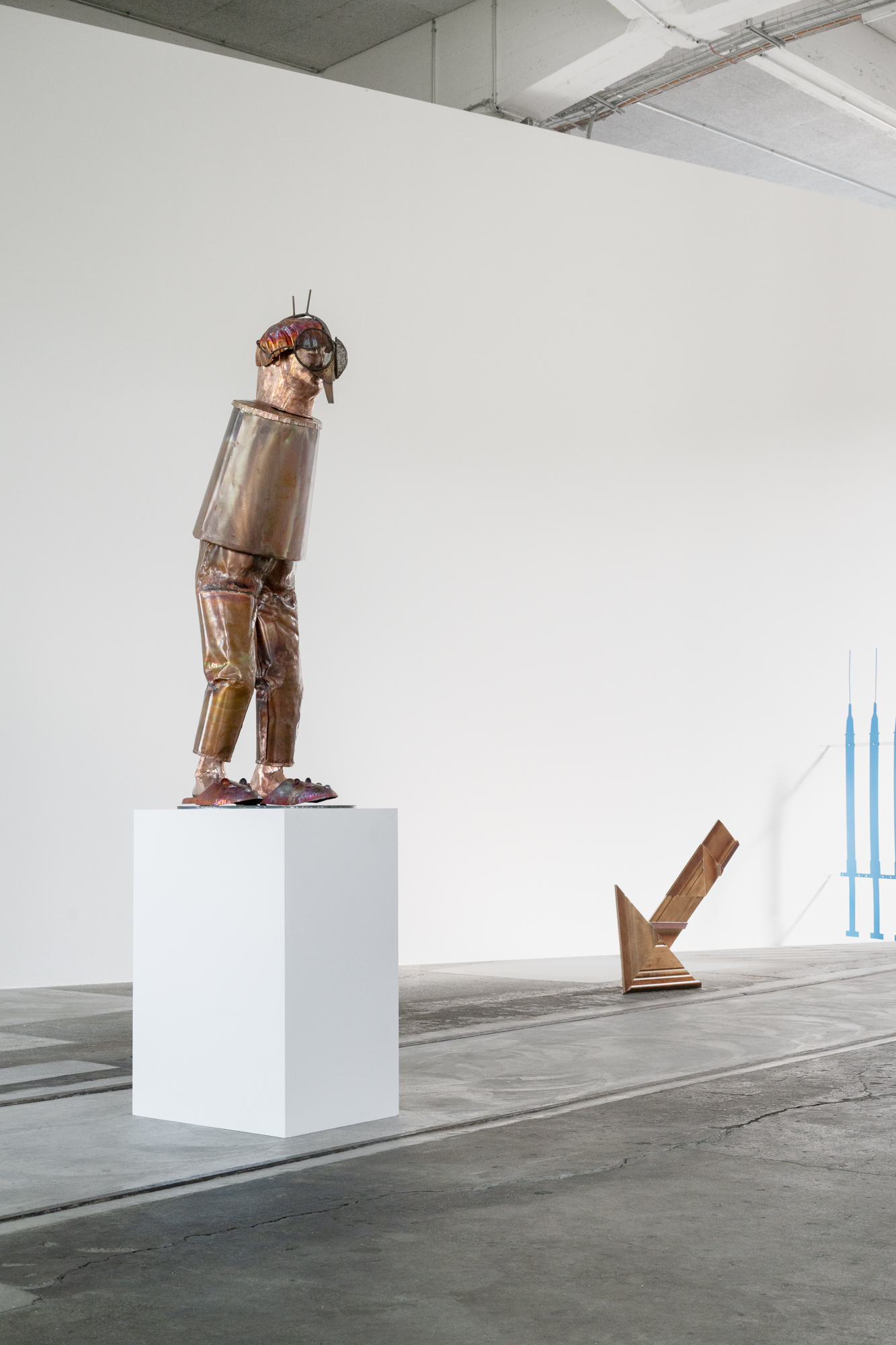
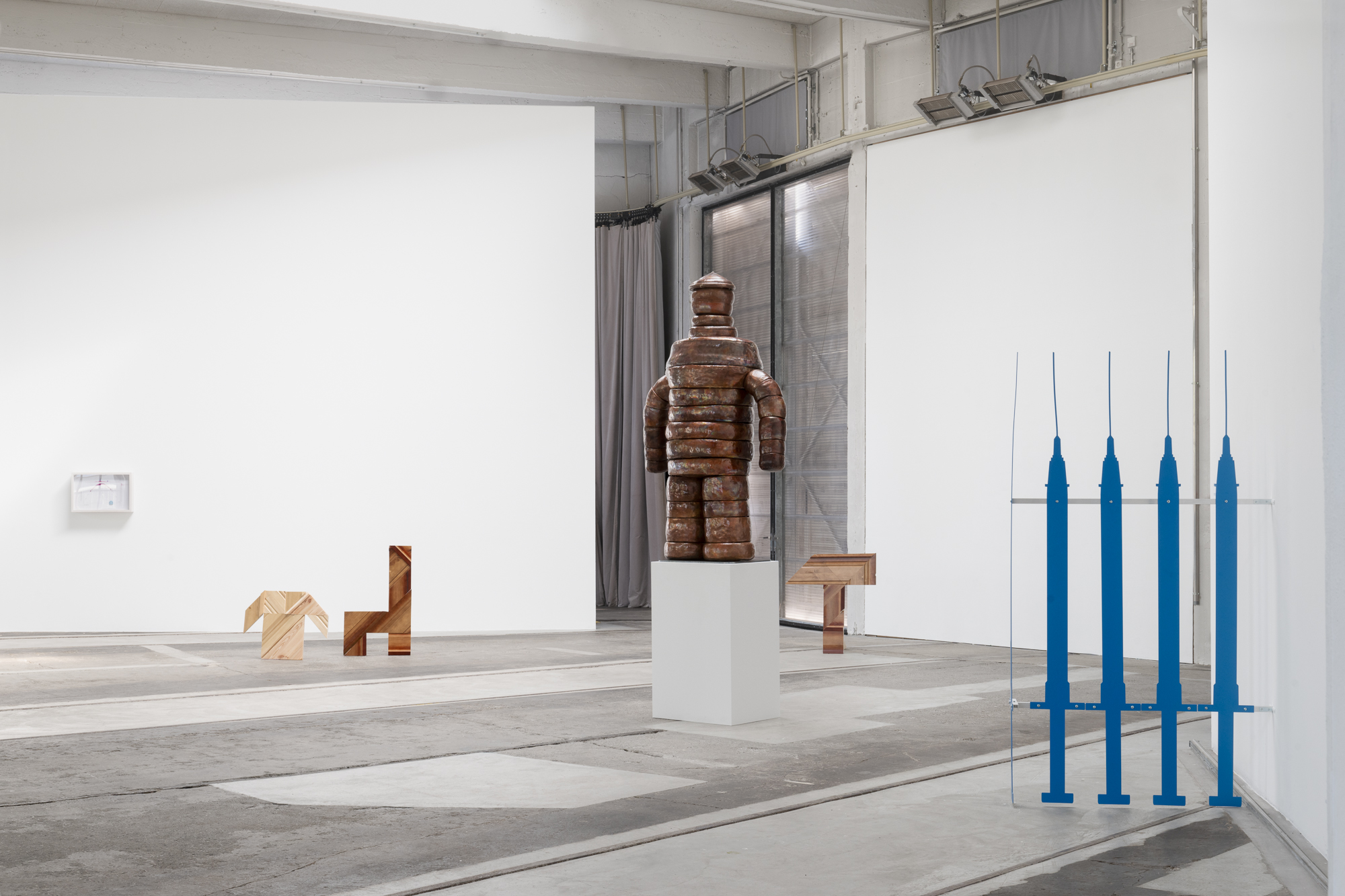
A series of wooden figures titled “A Game of Sleep” are scattered around the room. These are based on what are known as tangrams, Chinese wooden games in which pieces can be put together to create different shapes. RM has made their wooden figures from coffin parts. The reference to the game – where forms are arranged, dissolved and made into new figures – alludes to the body’s ability to transform itself. The wooden figures in the exhibition space are archetypal everyday objects: a shoe, a key, a hammer, a T-shirt, a candle. They evoke a daily reality of objects that are handled and used frequently, only becoming static after the person using them dies.
*
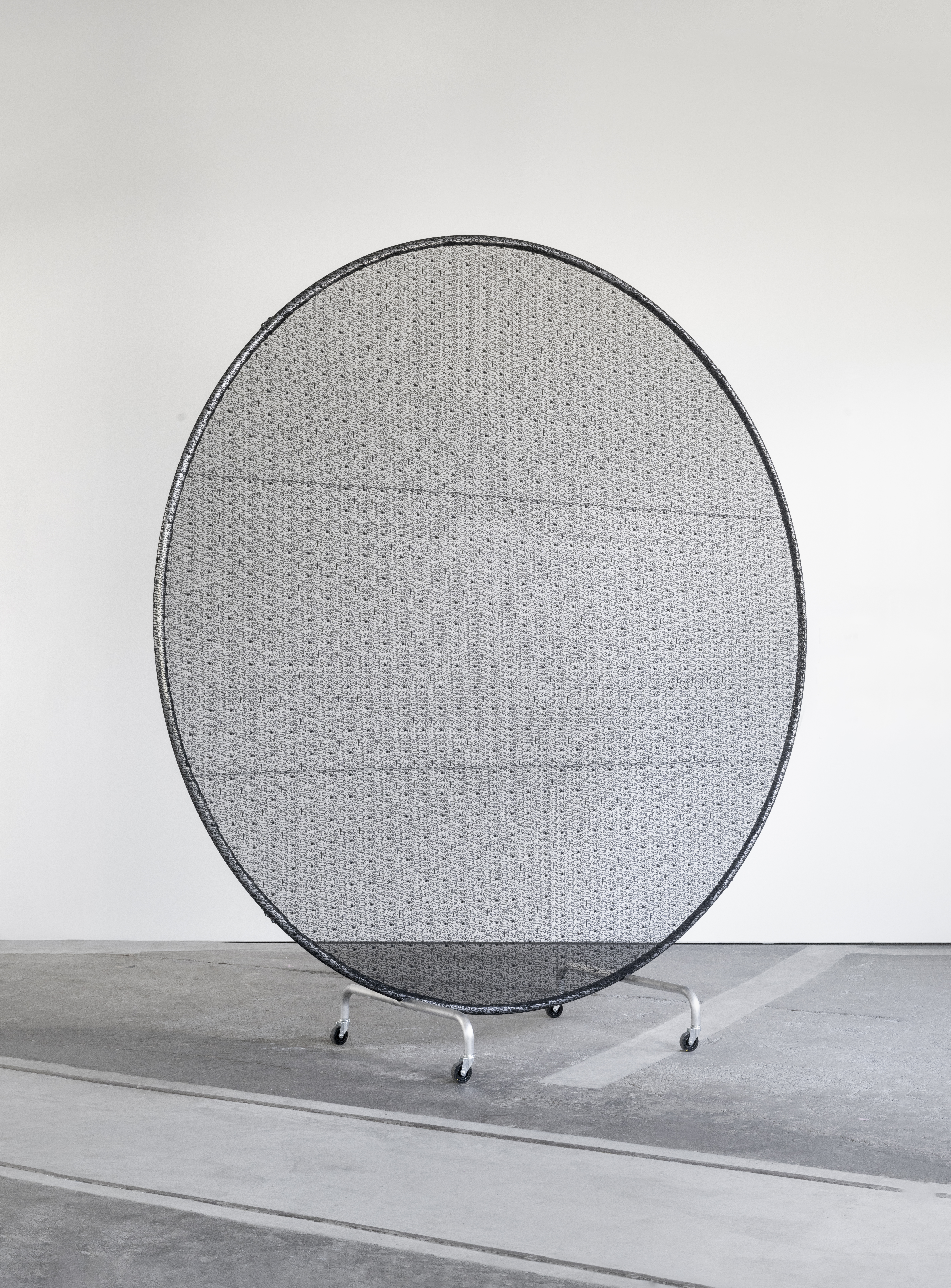
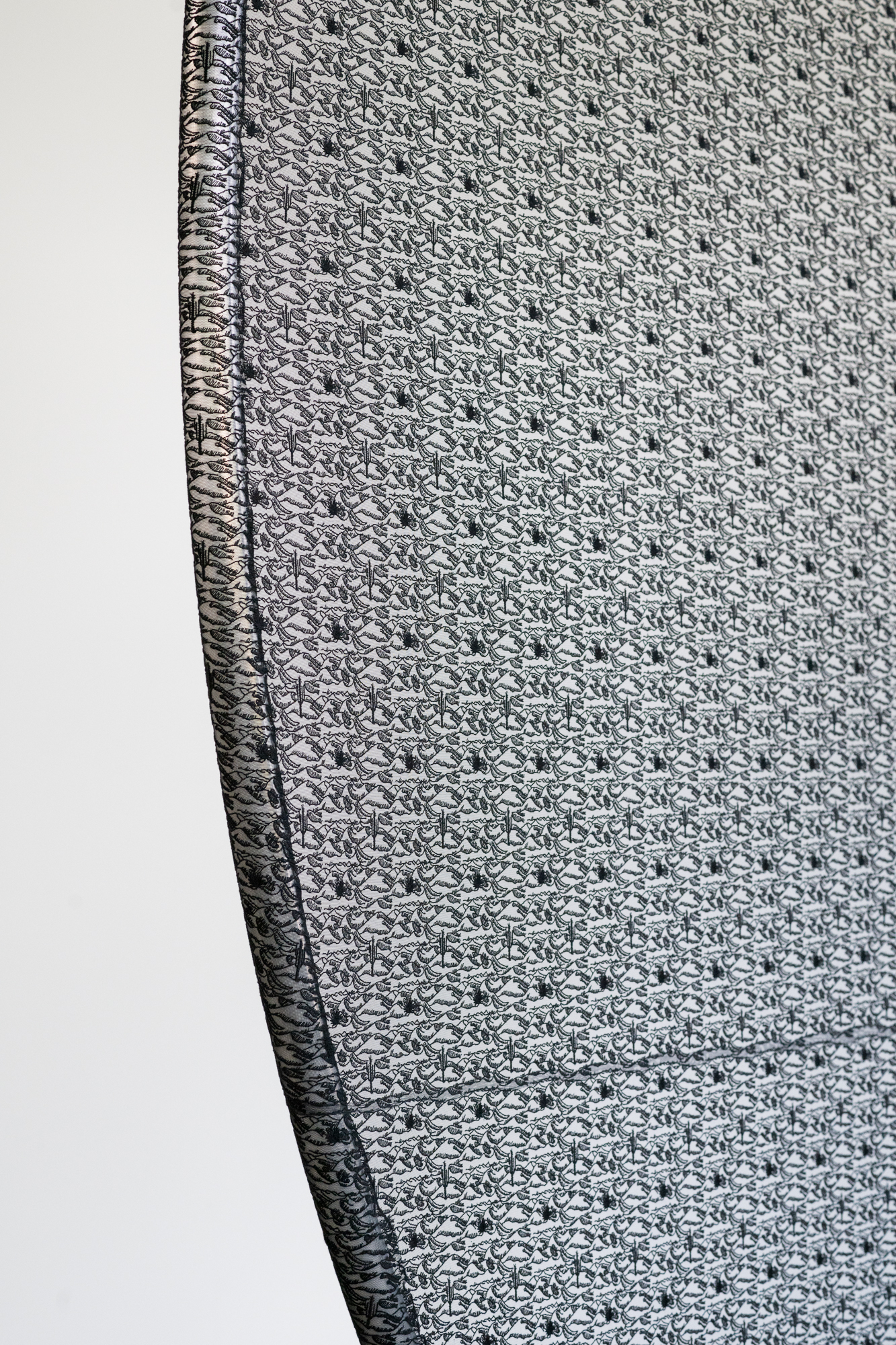
“Death Bed Etiquette” consists of a large circle onto which embroidered black Tulle is stretched. Put up in the exhibition space, it resembles a dark sun and might also be interpreted as a darkening lens, a filter through which the rest of the exhibition can be seen. The embroidery was performed by the last existing embroidery workshop in the St.Gallen region, by Walter Sonderegger, and shows a pattern of dunes, sand and cacti designed by the artists. We often think of desert landscapes as barren, when in reality they just host other, less accessible, forms of life. But deserts – with their difficult, threatening terrain – also symbolize a challenge. In the context of the show, the embroidered fabric holds an additional meaning: it is reminiscent of the black veils traditionally worn by women in mourning in order to create space for grief and to shield themselves from a world which, after the loss of a loved one, seems far too bright.
*
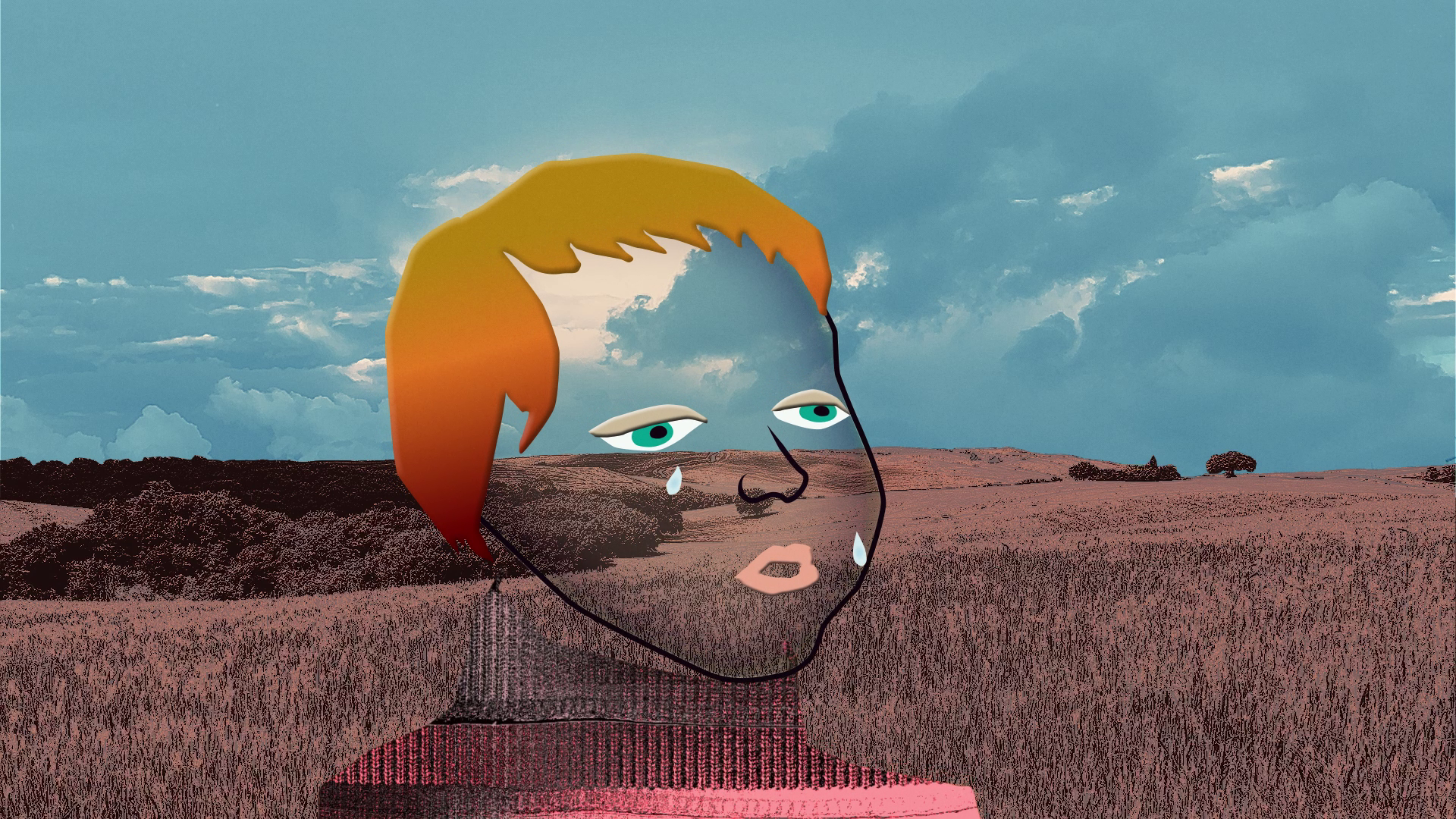
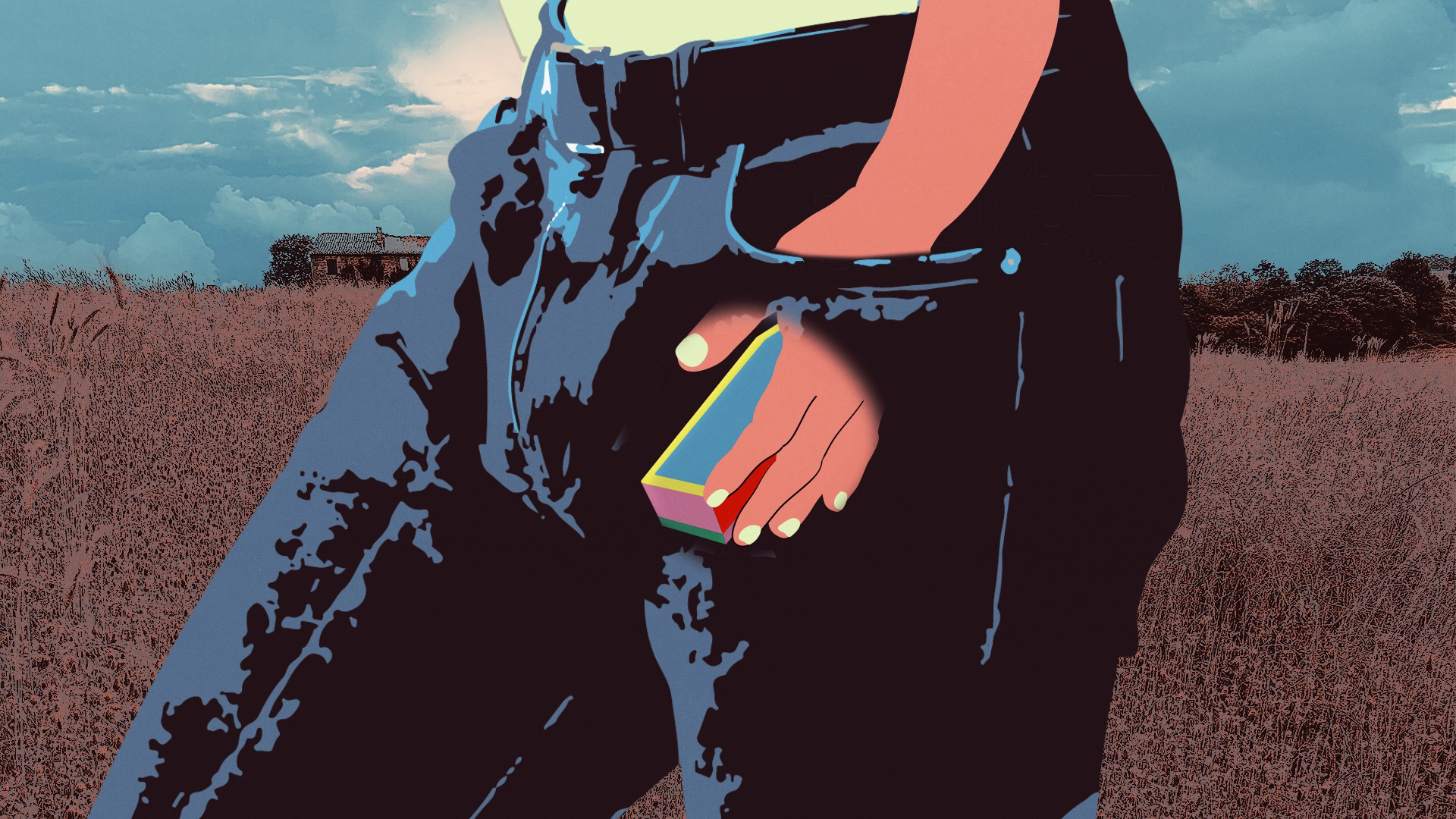
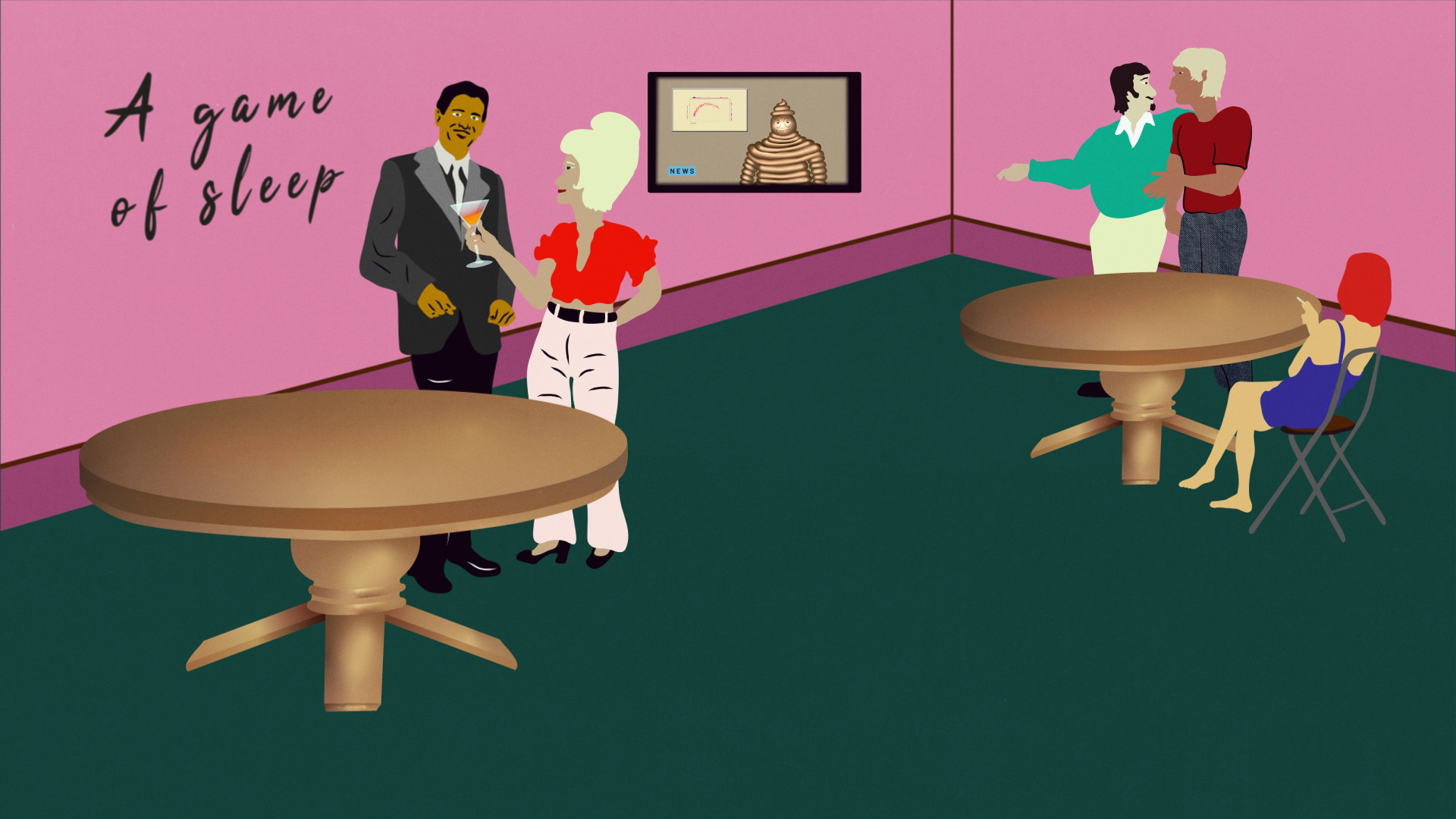
The video Two actions together in one frame captures the thematic scope of the exhibition and introduces its topics: dying and death and their physicality and symbolism. The physicality of dying in particular is illustrated by an ambivalence towards that which is excreted and expelled from bodies: feces, flatulence and breath. When controlled, these bodily excretions are signs of good health; uncontrolled, they suggest illness, the slipping and derailing of one’s own physicality, with death as the final outcome. In Two actions together in one frame, a comedy focusing on these physical processes and the rituals of mourning unfolds – a narrative strung together by figures, protagonists, forms and objects that we will encounter again elsewhere in the exhibition space.
Photos by S. Stadler